




Frequently Asked Questions
Science Shepherd Homeschool Curriculum
Below are some of the most common questions about Science Shepherd Homeschool Curriculum, including how creation and evolution are addressed, and how to access your video content. If you still need assistance after browsing our FAQ, please see our additional troubleshooting guide or contact us and we would be happy to help.
JUMP TO
Orders Astronomy: God's Universe Biology Earth Science Fundamentals of Chemistry
Fundamentals of Physics Introductory Science Life Science Physical Science Unearthing the Bible Website
-
We provide an overview of our recommended course progression on our blog.
-
As of May 2023, all video course subscriptions provide lifetime access to a given course - there is no expiration date. However, digital/eBook textbook subscriptions do have an expiration date. See relevant product pages for details.
If you purchased a video subscription prior to May 2023, contact us to learn how you can upgrade to lifetime access.
-
Accreditation is given to educational institutions, rather than to individual curricula. Therefore, since the homeschool family is the legal educational institution, accreditation is unnecessary. Educational requirements will most likely be determined by your local or state government and records/transcripts should be maintained by your homeschool. For more information on accreditation, please visit HSLDA: https://www.hslda.org/highschool/faq.asp.
-
Since these are science courses that were written by a Christian, probably the most common question I am asked is, “What about evolution and creation?” The answer really starts and ends with the Bible. It is the unerring Word of God and, as such, provides the framework upon which everything is understandable, including science. The creation/evolution discussion starts with the assumption that God’s Word is true and everything flows from there. Now, why evolution in Christian-based courses? It is important to cover evolution and some basic principles because our children will be constantly bombarded with it throughout their lives. It is everywhere – in history, sociology, modern culture and even business economics. I think it is clear that the enemy has used and will continue to use evolution as the single most powerful tool to fight against God’s Kingdom. Our children need to be prepared for this battle and I hope our courses can help achieve that. Both Life Science and Biology start by presenting basic science concepts to serve as the foundation upon which the creation and evolution chapters are based. In these science chapters, I present the science only, since the science is the science regardless of how it got to be that way. This allows me to develop deep scientific concepts straightforwardly and cover a lot of ground efficiently. Once students are on scientific solid footing, the origins discussions ensue, which serve as the centerpieces of both texts. God’s Word takes main stage, providing the lens through which scientific data is interpreted, since that is the only way to truly understand the gift God has given us over which to take dominion. All throughout the creation and evolution discussions, God’s Word is juxtaposed with the views of various atheist and agnostic scientific academicians so that it is clear that evolution is not science, but its own origins faith. Using the Bible as THE source of truth when studying science is the only way to fully understand the miracle of life. The discussion is really a look at the tenets of creation and evolution and then measuring the scientific data with theologically sounds principles. God’s Word is true and is relied upon time and time again as THE way to understand science through the origins debate. We objectively learn that, time and again, as fully expected since the Bible is true and accurate, the creation model is supported while the evolution model is not. And, the discussions are not some fluffy look into creation and evolution. These are very complex discussions dissecting where – and perhaps more importantly, why – the evolution model fails to explain and is often directly contradicted by the scientific data. I wanted to teach the students not what to think, but how to think about creation and evolution, ultimately for them to produce a rather devastating argument for why they believe what they believe. That is a lot easier when one understands the perfect correlation between God’s Word and science. It is not my intent to provide a “compare and contrast” discussion, but it is inevitable. The evolution model is found lacking and time after time we see that the scientific predictions of the creation model are what are observed. The data clearly fit the creation model; there is no conflict, and a major theme in the creation/evolution discussion is that is what we would expect since God’s Word is true.
If you'd like to learn more about our beliefs, we offer a number of free resources on the subject.
-
All Science Shepherd material is presented through the straightforward interpretation of Genesis, so a "young earth" point of view. Depending on the class, old earth creation may be addressed within the context of affirming the sufficiency of Scripture-- the Bible is the inspired, inerrant Word of God. Since He used historical Hebrew language structure to write Genesis, it should be understood as written, leading to the conclusion that God created the universe and everything in it in 6 literal, 24-hour days, about 6,000 years ago.
-
A very reasonable question, and one that has a pretty deep answer! There are all forms of learning, and each one requires different skillsets. Early on, many students do just fine with, and excel in, learning science through informal and experiential methods. They're great! Other times, students just haven't "gotten around" to "doing science" until an older age, and that's fine! However, it's important to recognize that as a student progresses through "grade school" to "middle school" to "high school" and then to college and beyond (if that is a goal), there is a distinct and necessary need to learn science effectively in a more traditional, "textbook-based" method. Following a schedule, learning from textbooks/graphics/maps/diagrams, doing step-by-step labs, along with other aspects of "formal" learning, require specific skillsets, and students who have not really ever "done science" using traditional methods can be steamrolled if suddenly the learning method goes from years of experiential learning to textbook learning in a matter of several months. There is a distinct way to "do science", and as the student gets older and knowledge increases, the ways to teach science mirror the way to do science. To that end, for the student who has benefitted from non-formal science learning and is now moving into formal learning, we strongly encourage parents and students to consider that the student is an "introductory" learner regardless of age/grade . . . not from the standpoint of never having learned any science, but from the standpoint of not having learned within a systematic knowledge delivery and acquisition method. Therefore, that student may have not acquired the necessary skillset to be an efficient and effective learner within a formalized system.
And that's OK!! Irrespective of age, whenever a student who has not really formally "done science" before, or who has learned in a non-traditional way, moves into a formalized science learning system, that student is an "introductory learner". It is as important for students to receive training on "how to learn science systematically" as it is to learn "how to do science systematically." In our courses, as students progress from one course to the next, not only are they learning more and more science, they are also developing and advancing the necessary skillset to learn science in a systematic way.
So, if you have an "older" student and Introductory Science is recommended, it is precisely with the intent of developing their skillset to systematically learn science from the ground up. Just because a student is such-and-such an age doesn't mean they should take 7th grade chemistry "because that's what the syllabus says." If that student has never systematically studied science before, then he or she hasn't been introduced to how to systematically study science. The most likely outcome is a very frustrated student who hates science. No one wants that! And we encourage you to be up front with your student; let him or her know that Introductory Science will be "too easy" and he or she will be able to complete it not in an entire year, but in a few months. That's OK! It will help him or her understand the basics of studying science and be better prepared for more advanced study. By starting your student with Introductory Science and letting him/her burn through it, the next course can be taken right away, and in so doing your student can rapidly build the necessary skillset to learn science effectively and efficiently.
-
Streaming via a TV can be a little hit or miss, depending on your device(s). The most straightforward way is to plug a laptop, or even some tablets, into an open HDMI port on your TV and use the TV as a big monitor. Another option is to use Chromecast, Apple TV, or build-in screensharing to share the video from your phone/tablet/computer to the TV wirelessly. Lastly, if you have a smart TV, and depending on it's built-in web browser, you may be able to login to our student portal directly from the TV and access the videos that way.
-
Science Shepherd courses are meant to be completed in one school year and are formatted with a recommended 34-36 week schedule, depending on the course. The one exception is Unearthing the Bible, which we recommend to complete in one semester (15 weeks). Of course, all schedules may be adapted to meet the needs of your family.
-
It is our sincere prayer that God will free enough time so that more courses can be researched and written. We do plan to release a high school chemistry, it is simply a matter of timing.
For the latest new courses and releases, please subscribe to our newsletter.
-
Yes, we have group licensing available for our video content and bulk discounts for printed material. Please review our co-op information or contact us for group licensing/pricing.
-
Yes, each online lesson video can be viewed multiple times. We encourage students to watch a lesson as many times as they need to in order to understand the material.
-
There are many aspects to this answer, which this FAQ will cover in detail, but the short answer is, "To remain competitive in the homeschool science curriculum space, we must." It should be noted that many curriculum companies have switched, and are switching, to soft cover books because they are far less expensive to print. Additionally, since the economic catastrophe that was the COVID-19 response, printing costs have increased by at least 20%, and unfortunately that appears to not be a temporary situation as even though supply chains are almost back to their pre-COVID days, prices have not come down...they have stopped going up, but that isn't the same as absorbing a sustained 20% to 30% increase in costs of printing (and this recent rapid increase followed a period of relative cost stability of over a decade). Printing costs are figured on a click-by-click basis, so that the more you print at once, the less it is per book to print. Science Shepherd is a small, family-owned business and we print far less at a time that our much larger major competitors, meaning that our per-book print cost is already higher because of our smaller printing batches. Additionally, and I can't emphasize this point enough, we print 100% of our books in the United States. We always have and always will. None of our competitors do that, and it results in a substantial per-book premium for us. Any of you who primarily source materials or manufactured items from outside the US know how much cheaper virtually everything is from outside the US. And yet, despite our materials being far more expensive to print, our prices are consistently at or below those of our competitors. We remain dedicated to bringing you the highest quality books, printed ONLY in the USA and hope that you can understand the myriad reasons that factor into the change from hard to soft cover.
General
-
After you place your order, visit scienceshepherd.com/a/members to login and access your online videos.
-
eBooks: After you complete your purchase we must manually create an eBook account for you (yes, sadly some things are still manual in the digital age). Once your eBook account is ready you will receive an email with your username and password. Please allow up to 2 business days for eBook orders to be processed. All eBooks must be accessed via https://dashboard.shelfit.com, or through the RedShelf App available for Android and iOS.
PDFs: A PDF download link is included on your order confirmation page and with your order confirmation email. Please note: PDF files may be opened only two (2) times via the provided download link, so be sure to save each PDF to your device right away for future access.
-
It may take up to 15 minutes after you complete a purchase to receive your course registration emaiI with login instructions. If it has been more than 15 minutes, it is possible your registration email went to spam. If you did not receive this email, you can simply click on the "My Courses" link at the top of the page and use the "Forgot Password" link to set a new password.
Please note: If you have previously set up a Science Shepherd account your new course will be automatically added to your existing account and you will not receive a new registration email. -
For fastest order processing, orders should be placed online. If you would like to place an order by phone, please send us an email with your phone number, and we will contact you.
-
We accept MasterCard, Visa, American Express, Discover, Google Pay, and Apple Pay.
If you would like to pay with a PO, please contact us.
-
You can review our shipping policy here.
-
You can review our return policy here.
-
You can review our terms of use here.
Orders
-
Level A of Astronomy: God's Universe includes 60+ video lessons. Level B contains those same lessons, plus over 25 additional lessons. So, Level B is a longer course than Level A. These additional lessons provide more advanced study in the areas of dark matter, dark energy, relativity and more. In addition, the Level B Workbook is more challenging than the Level A Workbook.
-
No, Astronomy: God's Universe does not have any tests or quizzes. If you would like a cumulative review of material for your student(s), we recommend using the crossword puzzles in the workbooks, which review material from several recent classes.
Astronomy: God's Universe
-
We recommend Biology for 9th – 12th grade. You can read more about our recommended course progression here.
-
The short answer is that the materials included with the video series can stand alone, but the optimal learning experience will not be attained without the textbook; however, there are nuances to that answer that deserve explaining. I have no doubt that if the video alone is utilized, your student will receive a most excellent learning experience, equal to/better than that of the other video-only based high school biology programs out there. The nuance in the answer is that it depends upon what you and your student’s goal is for learning biology. If the goal is to ensure a solid experience for someone who struggles with science and isn’t going to pursue too much further learning in the biological sciences, then the video only approach will absolutely achieve that goal. On the other hand, if the student is highly interested in biological science and/or wants to pursue it further after this class, then, while the video itself is “complete” in that all of the material in the text is presented in the video, the video alone will not provide adequate ability for the student or teacher to assess the completeness of understanding of the material. I think the ideal way to learn this material is to both read and hear it (students who are challenged with text-based learning often do quite well with the text after watching the information first presented visually), with the text ultimately serving as a ready reference should a question arise (in which case trying to find the relevant material on one of more than 130 video clips amassed over more than 40 hours of video will be quite challenging). In addition, the end of chapter questions in the book are designed to test complete mastery of the subject matter (and they are ideally set up for both text-based learners and auditory learners) since they are true-false and short answer questions. This is, by far, the most thorough way to assess your student’s understanding of the material (as opposed to multiple choice or fill in the blank). If the video series is used alone, this valuable knowledge testing resource will be lost. Now, it is true that I have developed multiple choice questions that are integrated into the video series and learning platform but, again, they are really designed as a supplement for, rather than a substitute of, the questions in the text itself.
-
The 3rd Edition, Revised of Biology includes almost exclusively updates to the graphics. There are a few minor rewrites for clarity, but otherwise the text remains unchanged from the 3rd Edition. The textbook is softcover, rather than hardcover.
-
The major changes are that Chapter 21 was nearly completely rewritten, as were significant portions of Chapters 26, 28 and 29. Throughout the text, graphics were updated and terms aligned with the changes reflected in Chapters 21, 26, 28 and 29. Of course, updates include new chapter and test questions to reflect the changed content, as well as appropriate updates to the Parent Companion material.
-
The book remains 34 chapters. Other than a couple of graphics, the only thing that will be different are the creation and evolution chapters, 17, 18 and 19. All three have been totally rewritten. They are now a little longer with 100% new pictures and illustrations, but I think the common themes running through all three make them flow very well and I do not believe that the extra length is going to be a huge problem for folks. The common theme is that we can see that science reflects the Bible as the authoritative Word of God because when we objectively measure the scientific evidence with the creation model and evolution model, the evidence fully supports creation and often contradicts, or is incompatible with, predictions of the evolution model. I continue to keep the philosophical discussions of creation and evolution in the three salient chapters, and the rest of the text continues to teach the science as the science. Chapter 17 describes the creation model and basic scientific tenets, 18 the evolution model with its tenets (notably including the fact that evolution was never meant to be compatible with a creation origins theory) and 19 directly compares how various scientific data fit into each one. The three chapters are much more scientifically rigorous than the first edition and, again, I have written them very straightforwardly with a focus on conceptual flow of ideas so that by the time the students are done, they will definitely understand complex and fundamentally scientific arguments supporting the creation model while simultaneously troubling the evolution one. New material includes a fairly in depth analysis of intelligent design, information theory, genetics and totally new fossil and radiodating concepts. Also, the fact that natural selection and genetic mutation cannot “do” what the evolution model says it can – and needs it to – “do” is fully fleshed out as one of the major scientific flaws of the evolution model.
-
This is a somewhat difficult question to answer with 100% accuracy since there is no specifically defined “AP®” or “CLEP®” approved program; rather, in the case of the AP® program, the company provides a syllabus around which a teacher designs their specific AP program. When I review that syllabus (many different AP syllabi are on the web and you will find them by searching “AP biology syllabus”, or the recommended AP® Biology content), I find that our program covers 100% of what the AP® syllabus recommends be covered (as well as all of the recommended topics students should learn for the Biology CLEP®), with the exception of in-depth treatment of evolutionary concepts. Noteworthy is that when I developed our program, I had 10 high school, including Campbell’s and Miller-Levine (“The Lion Book”) and 1 introductory college texts with which to gauge ours, and I developed ours to specifically contain as much in depth, but none of the distracting side-bar, material as the most comprehensive of the texts. So, in that regard, I believe that our Biology covers a significant portion, if not all, of the non-evolutionary topics upon which the AP® and CLEP® tests measure the students (again, with the exception of evolutionary concepts). Science Shepherd Biology covers some of the evolutionary tenets, but not in as great detail as the evolutionary-based texts and so your student would need supplementary material in that regard. I should also note that the AP® program focuses extensively on students not memorizing facts, but learning about biological principles and how they interrelate. That concept is one of the driving forces behind how I designed the material presentation and wrote the end-of-chapter and test questions. There are no fact memorization processes in our program. I want the student to learn Biology, not to regurgitate stuff without any knowledge as to why they know what they know. In that regard, both the AP® concept and our programs share a common thread.
-
The Q&A DVD is a comprehensive explanation of every study question from the textbook, with video, audio and illustrations used to drive the answers and concepts home.
Please note: Questions and answers for chapters 17-19 of the DVD are for the 1st edition textbook only, but all other chapter questions and answers will correspond to the 1st, 2nd and 3rd editions.
-
In order for the student to get the most out of the course, we encourage students to perform the labs at home. A student may choose to perform the labs at home while following along with the instructor on DVD, or do the labs independently and simply refer to the DVD before or after performing the labs at home. However, we realize this is not always financially or logistically possible. Therefore, since the DVD is a comprehensive presentation of all lab steps and findings, if the student follows the DVD diligently, completes all written portions in the lab book and completes the write ups, then the student will have completed all of the salient features of the laboratory experience.
-
- Record Keeping: Notebooks & Reports
- Diffusion-Osmosis
- General Cell Structure in Animals
- Reproduction: Cellular
- Protista: The Protozoans
- Cell Structure: Plant
- Leaf Structures The Cell Interior and Function
- Root Structure
- Reproduction: Pollen Germination
- Dissection: Clam
- Dissection: Earthworm
- Dissection: Grasshopper
- Dissection: Fish
- Dissection: Fetal Pig
- Classification of Animals I
- Classification of Animals II (Lab Manual only)
- Nervous System: Reaction Time
- Muscular System: Fatigue
- Population Succession Study
-
An optional lab kit containing the supplies used in our labs is available for purchase separately. A microscope and microscope case are also available for purchase. These are optional and may be purchased at Rainbow Resource Center.
Biology
Biology Labs
-
Level A of Earth Science includes 121 video lessons. Level B contains those same lessons, plus 40 additional lessons. So, Level B is a longer course than Level A. These additional lessons provide more advanced study in the areas of worldview, layers of the earth, lava, oceanography and more. In addition, the Level B Workbook is more challenging than the Level A Workbook.
-
No, Earth Science does not have any tests or quizzes. If you would like a cumulative review of material for your student(s), we recommend using the crossword puzzles in the workbooks, which review material from several recent classes.
Earth Science
-
The short answer is that the materials included with the video series can stand alone (especially when using the optional Workbook), but the optimal learning experience will not be attained without the textbook; however, there are nuances to that answer that deserve explaining. I have no doubt that if the video alone is utilized, your student will receive a most excellent learning experience, equal to/better than that of the other video-only based middle school chemistry programs out there. The nuance in the answer is that it depends upon what you and your student’s goal is for learning chemistry. If the goal is to ensure a solid experience for someone who struggles with science and isn’t going to pursue too much further learning in the biological or physical sciences, then the video only approach will absolutely achieve that goal. On the other hand, if the student is highly interested in biological/physical science and/or wants to pursue it further after this class, then, while the video itself is “complete” in that all of the material in the text is presented in the video, the video alone will not provide adequate ability for the student or teacher to assess the completeness of understanding of the material. I think the ideal way to learn this material is to both read and hear it (students who are challenged with text-based learning often do quite well with the text after watching the information first presented visually), with the text ultimately serving as a ready reference should a question arise (in which case trying to find the relevant material on one of more than 80 video clips amassed over more than 7 hours of video will be quite challenging). In addition, the end of chapter questions in the book are designed to test complete mastery of the subject matter (and they are ideally set up for both text-based learners and auditory learners) since they are true-false and short answer questions. This is, by far, the most thorough way to assess your student’s understanding of the material (as opposed to multiple choice or fill in the blank). If the video series is used alone, this valuable knowledge testing resource will be lost. Now, it is true that I have developed multiple choice questions that are integrated into the video series and learning platform but, again, they are really designed as a supplement for, rather than a substitute of, the questions in the text itself.
-
It's foundationally important to recognize that there is no "right way" to do science labs. The Chemistry: Physical and Chemistry Changes in Matter manual was solid and our students have benefited from it for several years. However, because it wasn't written specifically to support the respective class material that I wrote, the Chemistry: Physical and Chemistry Changes in Matter lab manual required students to jump around to different pages and contained some lab activities that were never performed. It's important to me that the lab manuals that support Science Shepherd courses are specifically written for, and fully integrated with, Science Shepherd classes. Our new Fundamentals of Chemistry Lab Manual is just that: 100% written to support, and sequentially follow, the material in the class. Although there is not a "right" way to do science labs, I do think there is a better way for students to "do labs", and this new lab manual achieves that goal, giving students an improved lab experience in Fundamentals of Chemistry.
Now, you might ask, "Why did you change the lab manual right now?"
There's never a "good time" to make a change like this. We are growing and have robust curriculum sales now even in the "off season", so there's really no down time. Additionally, I am a "just-rip-the-Band-Aid-off" kind of a guy. There's never a better time than now for this sort of thing.
Fundamentals of Chemistry
-
The short answer is that the materials included with the video series can stand alone (especially when using the optional Workbook), but the optimal learning experience will not be attained without the textbook; however, there are nuances to that answer that deserve explaining. I have no doubt that if the video alone is utilized, your student will receive a most excellent learning experience, equal to/better than that of the other video-only based middle school physical science programs out there. The nuance in the answer is that it depends upon what you and your student’s goal is for learning physics. If the goal is to ensure a solid experience for someone who struggles with science and isn’t going to pursue too much further learning in the physical sciences, then the video only approach will absolutely achieve that goal. On the other hand, if the student is highly interested in physical science and/or wants to pursue it further after this class, then, while the video itself is “complete” in that all of the material in the text is presented in the video, the video alone will not provide adequate ability for the student or teacher to assess the completeness of understanding of the material. I think the ideal way to learn this material is to both read and hear it (students who are challenged with text-based learning often do quite well with the text after watching the information first presented visually), with the text ultimately serving as a ready reference should a question arise (in which case trying to find the relevant material on one of more than 80 video clips amassed over more than 7 hours of video will be quite challenging). In addition, the end of chapter questions in the book are designed to test complete mastery of the subject matter (and they are ideally set up for both text-based learners and auditory learners) since they are true-false and short answer questions. This is, by far, the most thorough way to assess your student’s understanding of the material (as opposed to multiple choice or fill in the blank). If the video series is used alone, this valuable knowledge testing resource will be lost. Now, it is true that I have developed multiple choice questions that are integrated into the video series and learning platform but, again, they are really designed as a supplement for, rather than a substitute of, the questions in the text itself.
-
It's foundationally important to recognize that there is no "right way" to do science labs. The Interactive Notebook: Physical Science manual was solid and our students have benefited from it for several years. However, because it wasn't written specifically to support the respective class material that I wrote, the Interactive Notebook: Physical Science lab manual required students to jump around to different pages and contained some lab activities that were never performed. It's important to me that the lab manuals that support Science Shepherd courses are specifically written for, and fully integrated with, Science Shepherd classes. Our new Fundamentals of Physics Lab Manual is just that: 100% written to support, and sequentially follow, the material in the class. Although there is not a "right" way to do science labs, I do think there is a better way for students to "do labs", and this new lab manual achieves that goal, giving students an improved lab experience in Fundamentals of Physics.
Now, you might ask, "Why did you change the lab manual right now?"
There's never a "good time" to make a change like this. We are growing and have robust curriculum sales now even in the "off season", so there's really no down time. Additionally, I am a "just-rip-the-Band-Aid-off" kind of a guy. There's never a better time than now for this sort of thing.
Fundamentals of Physics
-
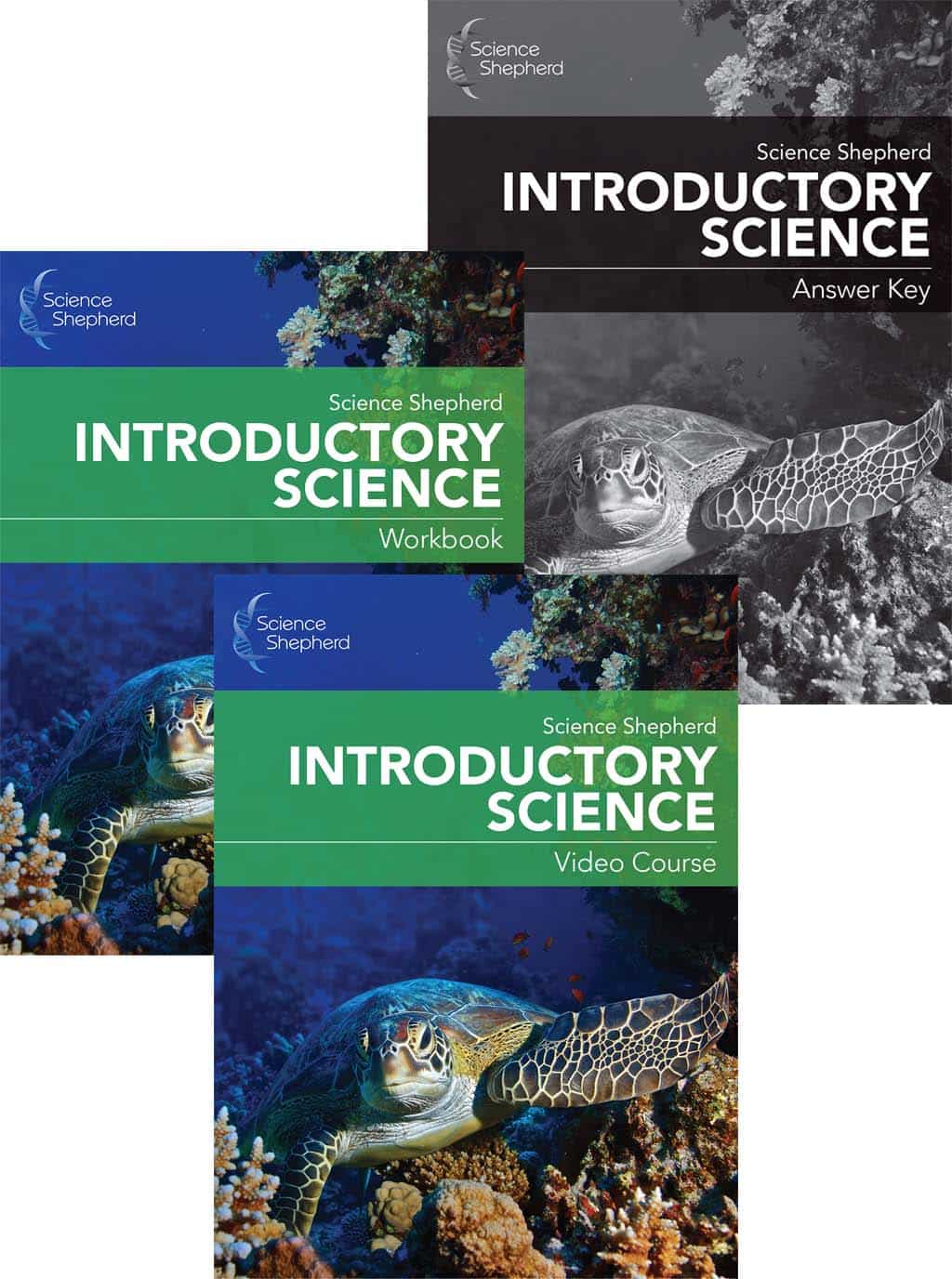
Yes, the video course for Introductory Science is the same for both Workbook Level A and Level B. Only the Workbook content is different. There are more questions in Workbook Level B and they are written to be slightly more challenging.
Introductory Science
-
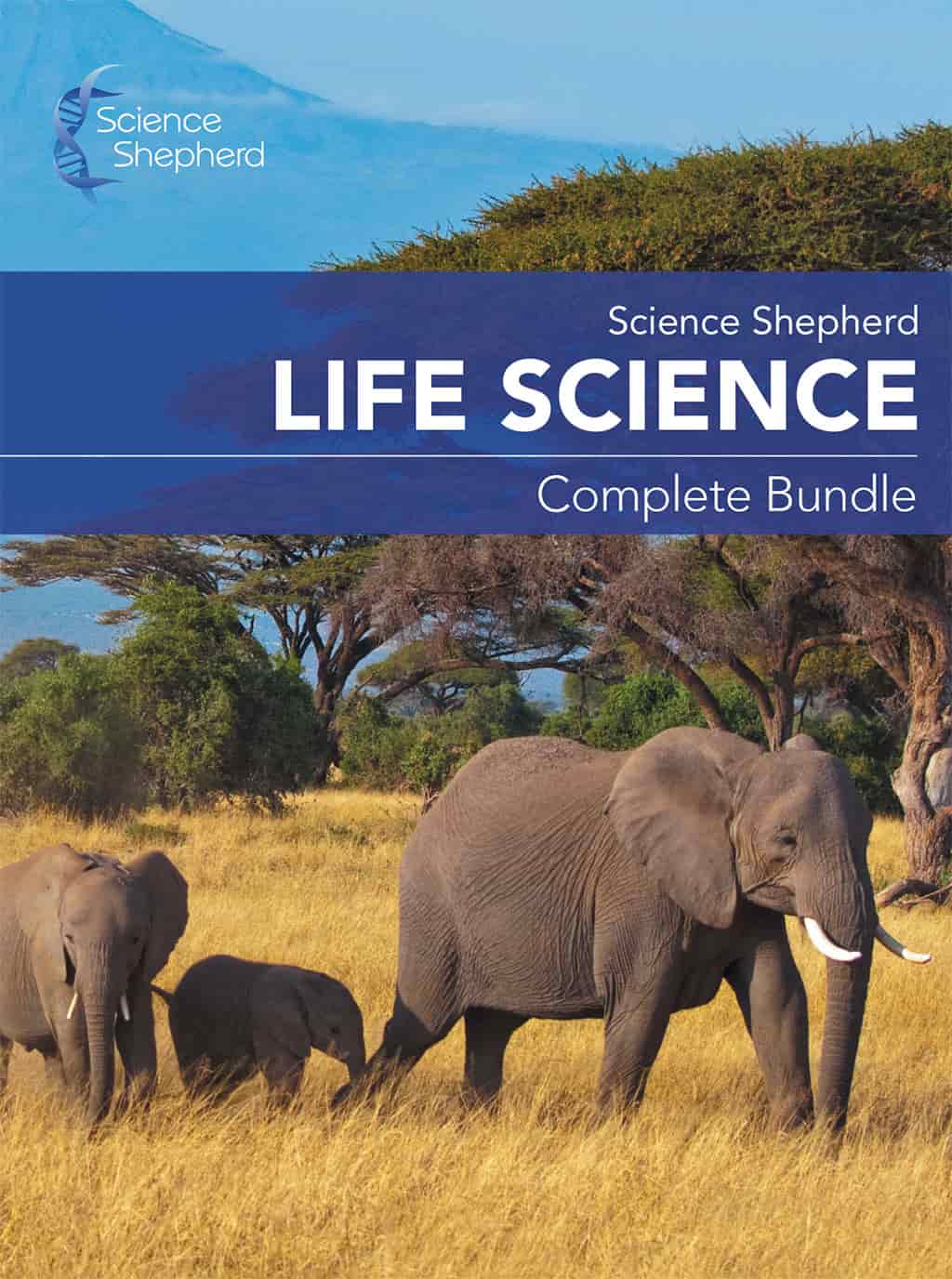
Life Science was designed for 6th to 8th grade, but would also be appropriate as a 9th grade introductory text. You can learn more about our recommended course progression here.
-
The short answer is that the materials included with the video series can stand alone (especially when using the optional Workbook), but the optimal learning experience will not be attained without the textbook; however, there are nuances to that answer that deserve explaining. I have no doubt that if the video alone is utilized, your student will receive a most excellent learning experience, equal to/better than that of the other video-only based middle school life science programs out there. The nuance in the answer is that it depends upon what you and your student’s goal is for learning life science. If the goal is to ensure a solid experience for someone who struggles with science and isn’t going to pursue too much further learning in the biological sciences, then the video only approach will absolutely achieve that goal. On the other hand, if the student is highly interested in biological science and/or wants to pursue it further after this class, then, while the video itself is “complete” in that all of the material in the text is presented in the video, the video alone will not provide adequate ability for the student or teacher to assess the completeness of understanding of the material. I think the ideal way to learn this material is to both read and hear it (students who are challenged with text-based learning often do quite well with the text after watching the information first presented visually), with the text ultimately serving as a ready reference should a question arise (in which case trying to find the relevant material on one of more than 100 video clips amassed over more than 20 hours of video will be quite challenging). In addition, the end of chapter questions in the book are designed to test complete mastery of the subject matter (and they are ideally set up for both text-based learners and auditory learners) since they are true-false and short answer questions. This is, by far, the most thorough way to assess your student’s understanding of the material (as opposed to multiple choice or fill in the blank). If the video series is used alone, this valuable knowledge testing resource will be lost. Now, it is true that I have developed multiple choice questions that are integrated into the video series and learning platform but, again, they are really designed as a supplement for, rather than a substitute of, the questions in the text itself.
-
For the 2nd edition of Life Science, terminology has been updated to reflect current standards. Graphics have also been updated throughout the text. The scope and sequence remains mostly the same, but some slight changes have been made within certain chapters for better clarity and flow.
-
While the Life Science Video Course is based on the 2nd edition textbook, the changes from the 1st edition to 2nd edition are small enough that students should be able to use a 1st edition textbook with the Video Course without much confusion. In places where the Video Course and textbook differ, preference should be given to the Video Course.
Also, the recommended reading schedule that the Video Course follows is different from the one in the 1st edition Answer Key & Parent Companion in a few places. For continuity, students should follow the reading schedule of the Video Course.
-
It's foundationally important to recognize that there is no "right way" to do science labs. The Life Science Quest manual was solid and our students have benefited from it for many years. However, because it wasn't written specifically to support the respective class material that I wrote, the Life Science Quest lab manual required students to jump around to different pages and contained some lab activities that were never performed. It's important to me that the lab manuals that support Science Shepherd courses are specifically written for, and fully integrated with, Science Shepherd classes. Our new Life Science Lab Manual is just that: 100% written to support, and sequentially follow, the material in the class. There are no wasted pages, and it contains more hands-on activities than the predecessor lab manual. Although there is not a "right" way to do science labs, I do think there is a better way for students to "do labs", and this new lab manual achieves that goal, giving students an improved lab experience in Life Science.
Now, you might ask, "Why did you change the lab manual right now?"
There's never a "good time" to make a change like this. We are growing and have robust curriculum sales now even in the "off season", so there's really no down time. Additionally, I am a "just-rip-the-Band-Aid-off" kind of a guy. There's never a better time than now for this sort of thing.
Life Science
-
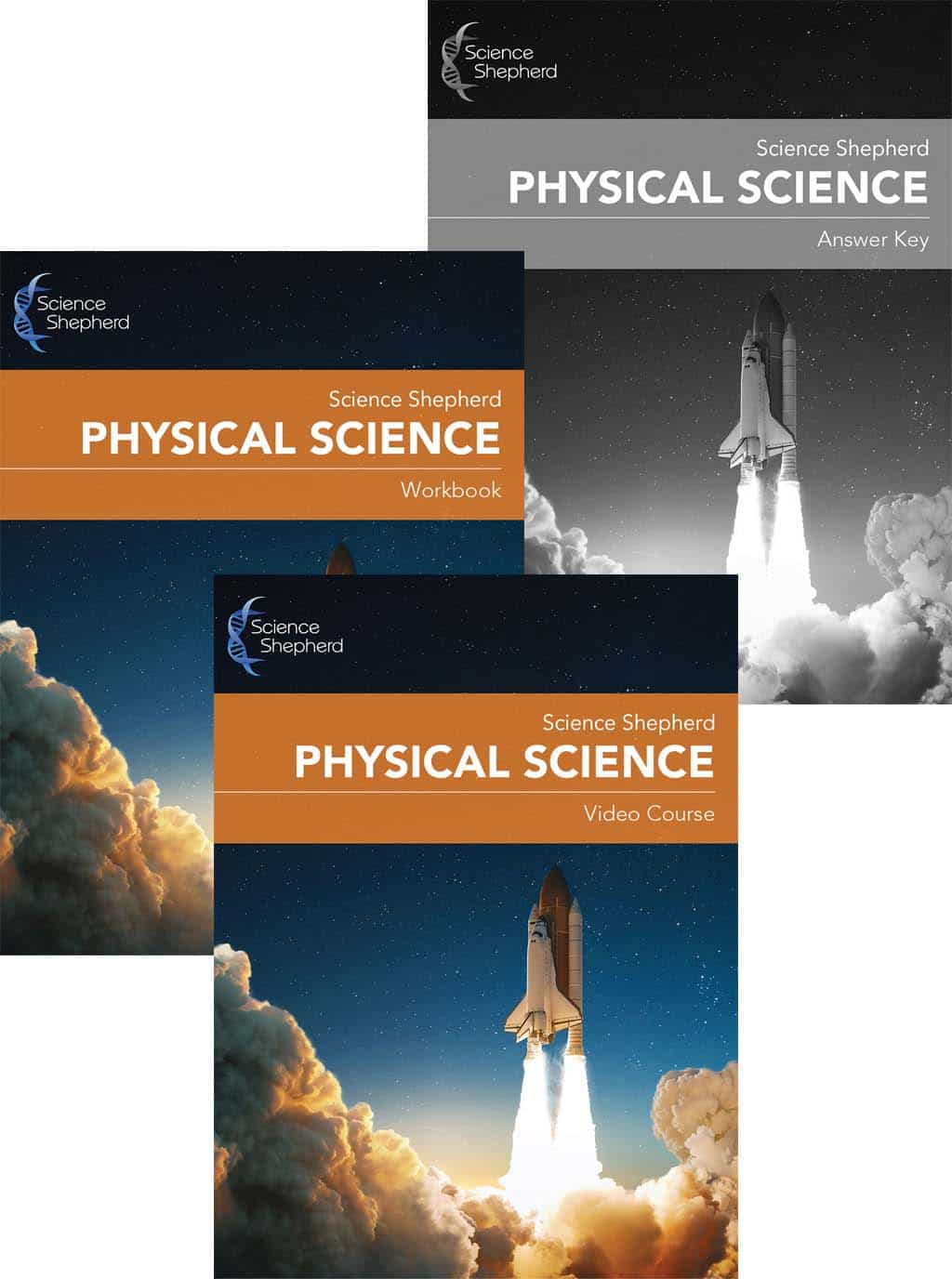
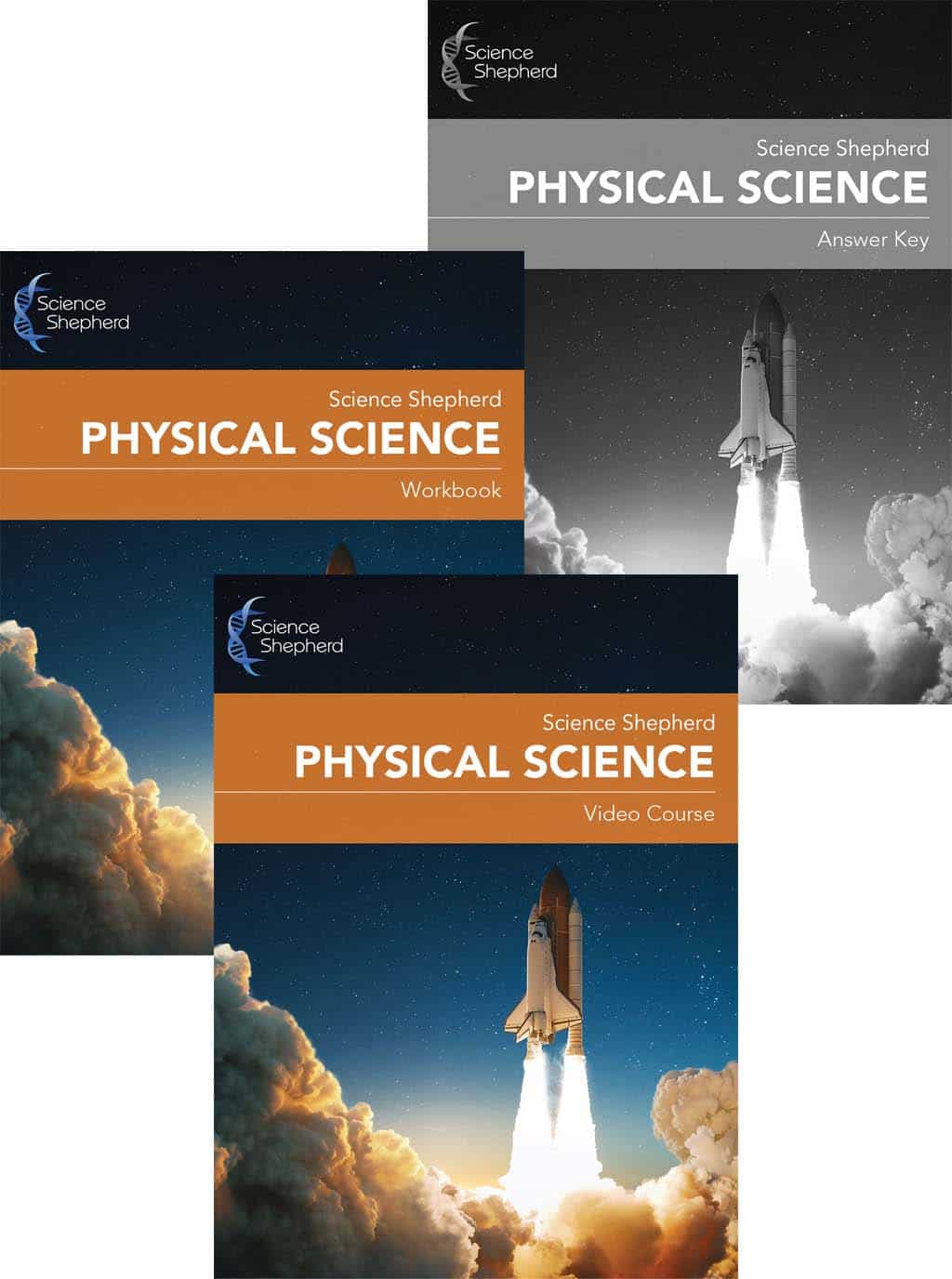
Yes, the video course for Physical Science is the same for both Workbook Level A and Level B. Only the Workbook content is different. There are more questions in Workbook Level B and they are written to be slightly more challenging. Workbook Level B also has a bit of math.
Physical Science
-
A link to download the Unearthing the Bible Workbook and Answer Key will be included with your order confirmation email. If you no longer have that email or it does not include a download link, you can also access those resources on your order status page.
-
At this time, the Unearthing the Bible Workbook and Answer Key are only available as a downloadable PDF to print at home.
-
Yes, please see our co-op information for details.
Unearthing the Bible
-
Certain security settings prevent links to PDF files from working properly. If a sample link doesn’t work, right click on the link, then left click on “copy shortcut” or “copy link location” and paste into the address bar. If you are still having trouble, please contact us.
-
Please visit our Troubleshooting page.
Website
Still Need Help?
Contact Us Today!
If you still have a question about your order, technical support or Science Shepherd in general, please send us a message and we would be happy to help. In most cases, you will hear back from us within 1 business day.